
Event-study DiD with Sun & Abraham (fixest)
@misc{fixest,
  title        = {fixest},
  author       = {Laurent Bergé},
  howpublished = {\url{https://lrberge.github.io/fixest/}},
  note         = {Software / documentation}
}Follow the analysis.
Select a node to explore the method
Assemble panel with cohort timing
Data preparation — shapes the raw inputs into what the estimator expects.
Panel id × period; cohort = the period each unit is first treated.
data(base_stagg)

Before using this step, make its assumptions and its output explicit. A useful peer note explains what you would check, what could go wrong, or what would change your interpretation.
Questions to explore- Which assumption matters most here, and what evidence could challenge it?
- What would you check before passing this output to the next step?
Choose a question to start your comment.
Peer discussion
- Bring your experience, a question, or a different perspective.
Log in to comment on this step.
[fixest] Sun & Abraham event study — sunab()
The core estimate — where the causal quantity itself is computed.
Fit feols with sunab(cohort, period) — interaction-weighted, robust to heterogeneous timing.
Sun & Abraham event study — sunab() — Interaction-weighted event-study estimator robust to heterogeneous treatment timing, in a fast fixed-effects framework.
m <- feols(y ~ sunab(year_treated, year) | id + year, base_stagg)
Before using this step, make its assumptions and its output explicit. A useful peer note explains what you would check, what could go wrong, or what would change your interpretation.
Questions to explore- Which assumption matters most here, and what evidence could challenge it?
- What would you check before passing this output to the next step?
Choose a question to start your comment.
Peer discussion
- Bring your experience, a question, or a different perspective.
Log in to comment on this step.
Naive TWFE comparison
A robustness check — does the headline result survive a different lens?
Estimate plain TWFE event-study to see the bias Sun-Abraham corrects.
twfe <- feols(y ~ i(time_to_treat, ref = -1) | id + year, base_stagg)
Before using this step, make its assumptions and its output explicit. A useful peer note explains what you would check, what could go wrong, or what would change your interpretation.
Questions to explore- Which assumption matters most here, and what evidence could challenge it?
- What would you check before passing this output to the next step?
Choose a question to start your comment.
Peer discussion
- Bring your experience, a question, or a different perspective.
Log in to comment on this step.
iplot(): SA20 vs TWFE vs truth
Reporting — turn the numbers into a figure or table a reader can act on.
Overlay the event-study coefficients; Sun-Abraham tracks the true effect, TWFE drifts.
iplot(list(m, twfe))
Before using this step, make its assumptions and its output explicit. A useful peer note explains what you would check, what could go wrong, or what would change your interpretation.
Questions to explore- Which assumption matters most here, and what evidence could challenge it?
- What would you check before passing this output to the next step?
Choose a question to start your comment.
Peer discussion
- Bring your experience, a question, or a different perspective.
Log in to comment on this step.
Inputs & data
A panel with staggered treatment cohorts: unit id, period, cohort (first-treatment period), and an outcome.
Show data format & exampleHide example
Format — one row per (unit, period). cohort = first treated period.
 id  period  cohort   y
  1      1       3    2.0
  1      2       3    2.1
  2      1       5    1.8
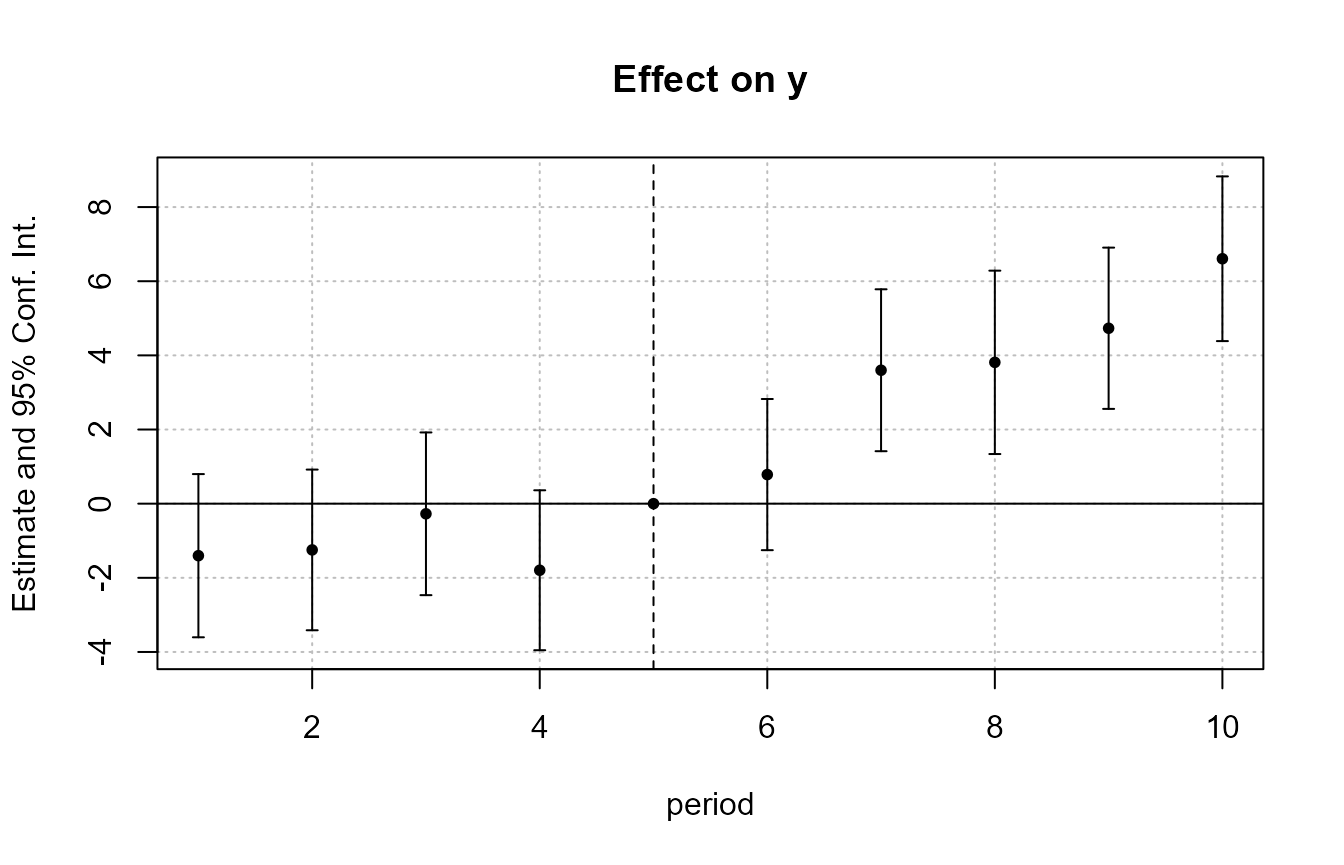
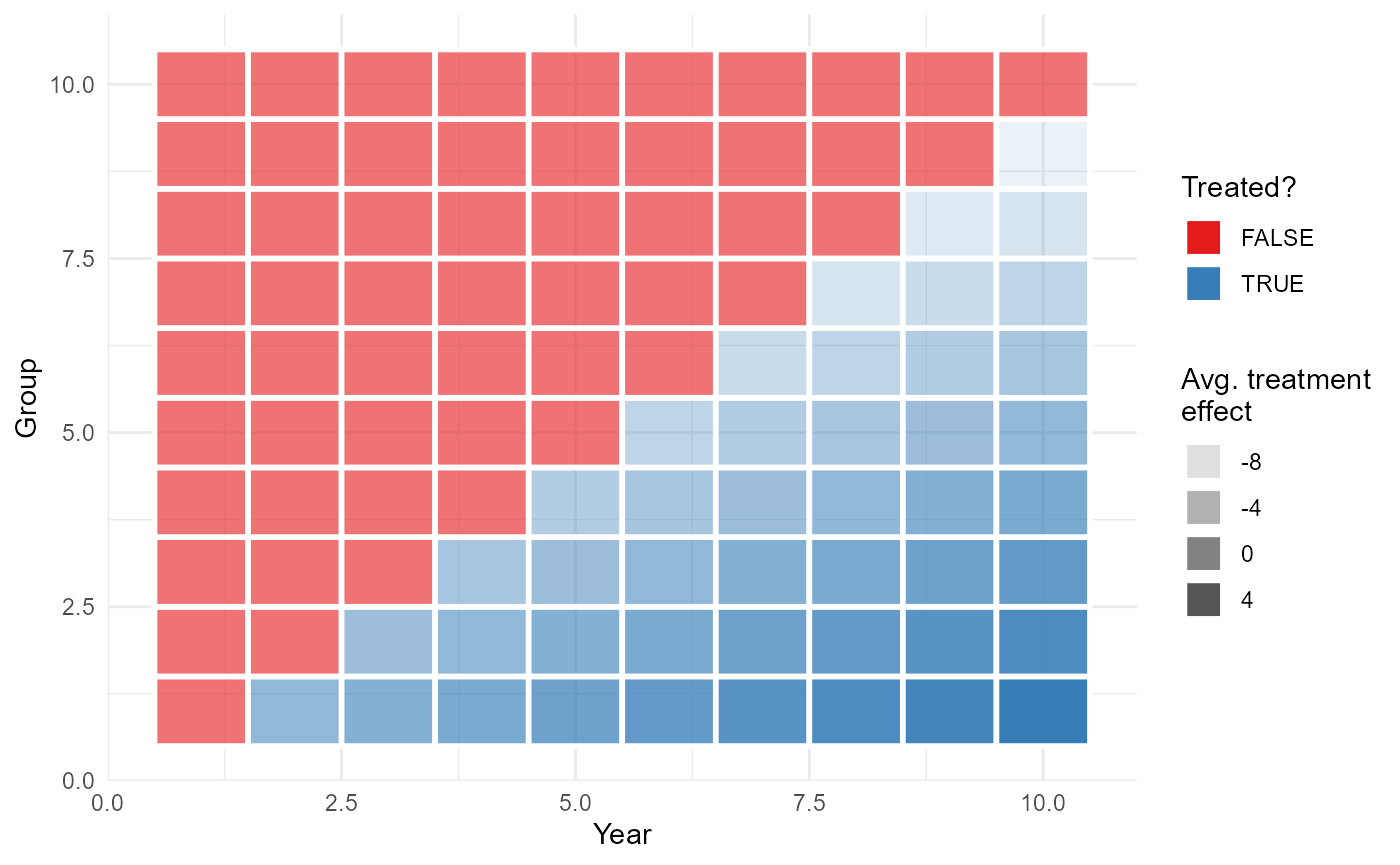
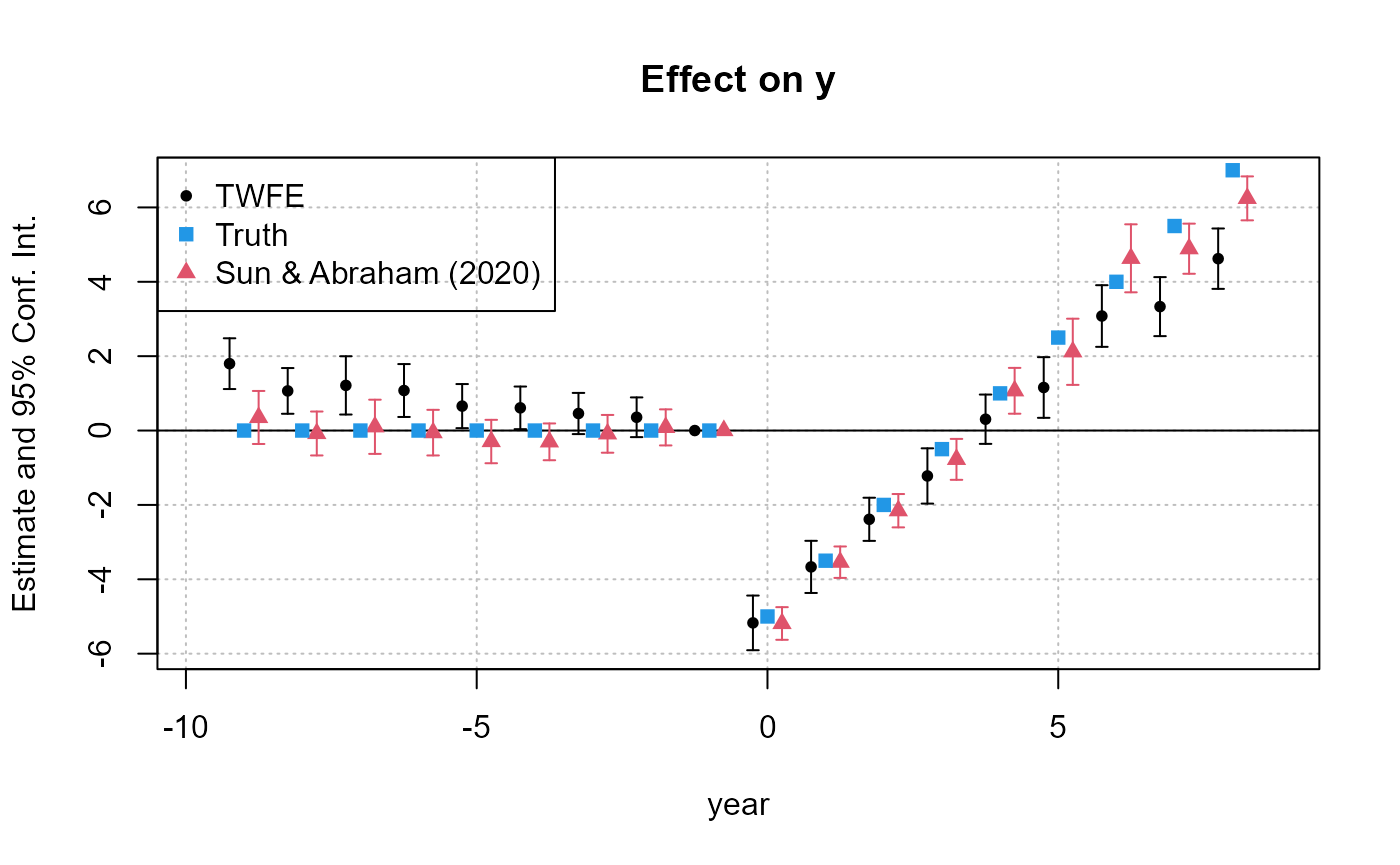
Figures reproduced from fixest — Laurent Bergé — unofficial community showcase; all credit to the original authors.
From the fixest walkthrough. Build a staggered panel, fit the Sun-Abraham interaction-weighted event study, and compare it to naive TWFE. Unofficial summary.
Discuss the workflow (2)
Log in to join the discussion.
feols is stupid fast and sunab() makes the SA correction a one-liner. No reason to hand-roll event studies anymore.
Nice complement to the did package — same idea (don't trust naive TWFE under staggered timing), FE flavour.
Exactly. iplot() overlaying SA20 vs TWFE vs truth is the clearest illustration of the bias I've seen.